Applied machine learning extension of an academic GLM project
Bike Sharing Demand Prediction
Model comparison platform for operational demand forecasting
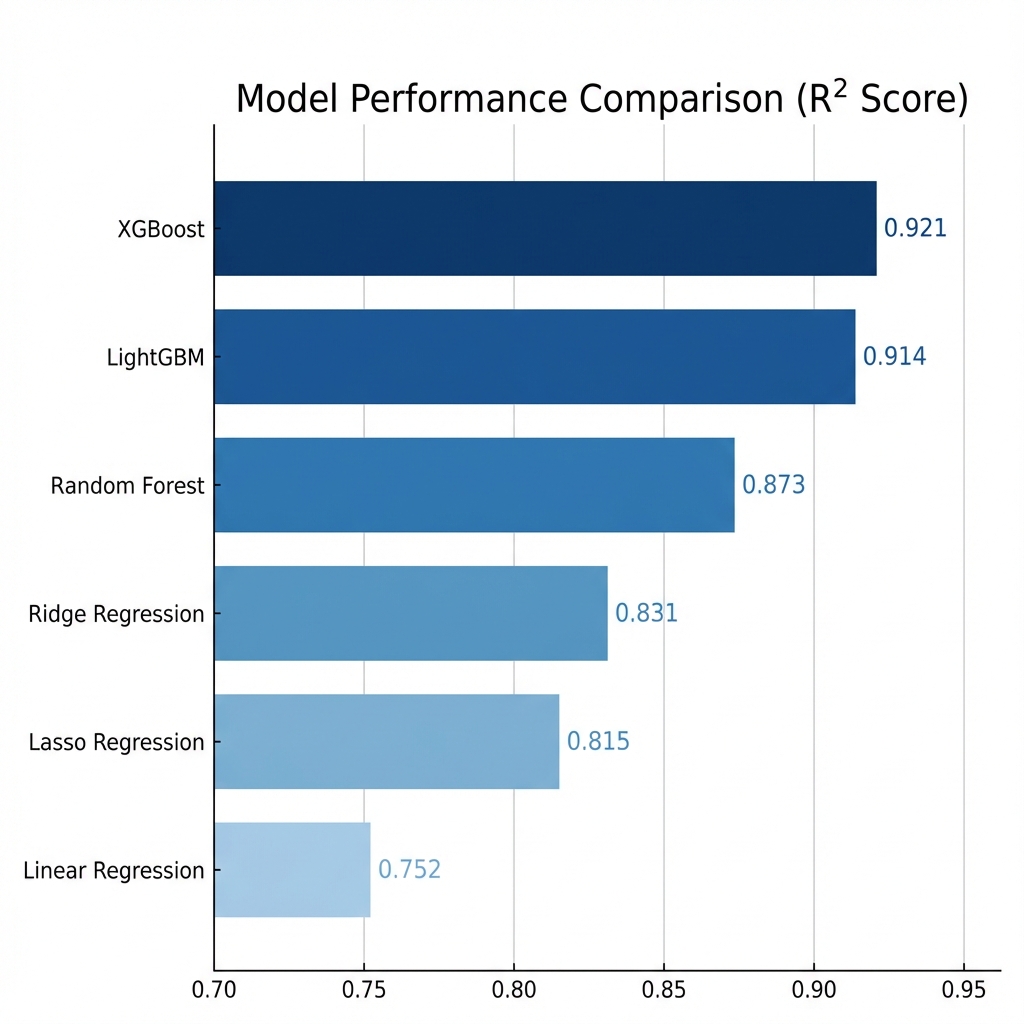
The project extends a GLM-based academic study into a broader machine learning workflow. It compares linear, tree-based, and boosting models under a consistent evaluation setup and keeps the code organized for reuse.
6
Models tested
0.85+
Best R2
180-220
RMSE
Problem
Demand forecasting for urban mobility needs a reproducible process for comparing models, validating feature engineering, and exposing the best model for downstream use.
Approach
Prepared the data, added feature engineering and target transformations, tuned several models with GridSearchCV, logged the comparison outputs, and packaged the project structure with Docker and serialized artifacts.
Results
The strongest models achieved an R-squared above 0.85 with RMSE around 180 to 220 rentals, improving on a more classical GLM baseline.
What is in the repository
Role and scope
Forecasting workflow design, model benchmarking, and packaging
Project context
Applied machine learning extension of an academic GLM project
Main stack